While the U.S.–Iran memorandum seeks to constrain Israeli action and keep Lebanon within Iran’s strategic orbit, the Israel–Lebanon MOU offers Lebanon a potential path toward reasserting state authority and reshaping the long‑standing dynamics of the conflict.
On June 26th, as Israelis were already in the middle of their Shabbat dinners, a surprising report from Washington announced the signing of a “framework agreement” between Israel and Lebanon. Spearheaded by Secretary of State Marco Rubio, Israeli Ambassador Yechiel Leiter, and Lebanese Ambassador Nada Hamadeh Mouawad—and following five rounds of negotiations held in Washington—the trilateral agreement marks a historic breakthrough in the relationship between the two countries, which until now has been defined almost exclusively by conflict.
This is not the first attempt to allow diplomacy to lead, and previous agreements have had clear limitations. The armistice agreement signed in Rosh Hanikra in March 1949 by Israeli representative Mordechai Makleff and Lebanese representative Toufic Salem aimed to “facilitate the transition from the present truce to permanent peace.” Peace was also nominally “achieved” in 1983 following significant shuttle diplomacy by Secretary Shultz, yet a state of war remained the de facto reality on the ground. This was especially true after the rise of Hezbollah, an Iranian proxy established in 1982, which replaced the Palestinian militias as the dominant armed actor in southern Lebanon.
In the last fifty years, the Israel–Lebanon relationship has been defined by a chronology of conflict. Israeli troops entered Lebanon in 1978 during the first Litani Operation, fighting the PLO and other Palestinian militias following the Coastal Road massacre near Tel Aviv—a terrorist attack planned by the PLO in Lebanon that killed 38 Israeli civilians, including 13 children. Israel again found itself deep inside Lebanon four years later during the 1982 war, triggered once more by Palestinian terrorism, reaching all the way to Beirut.
Following the war, Israel established the first “security zone” in Lebanon and withdrew its forces only eighteen years later, in 2000. The “Blue Line” border was demarcated, with UNIFIL forces instructed to keep it secure. This mechanism, however, did not prevent Hezbollah’s growing presence in southern Lebanon and eventually led to the Second Lebanon War, triggered by a cross‑border raid by Hezbollah on July 12, 2006.
Following another withdrawal and another UN resolution (1701, calling for Israeli forces to withdraw from southern Lebanon while Hezbollah and other armed groups moved north of the Litani River), the status quo in the south hardly changed. Hezbollah continued to strengthen its presence—often under the ‘watchful’ eyes of UN observers—and numerous clashes occurred, mostly involving Hezbollah. In 2023, a full‑scale conflict emerged again after Hezbollah joined Hamas and Iran in the October 7/Gaza war.
The Structural Weakness of the Lebanese State
Lebanon’s inability to prevent non‑state actors from operating within its borders reflects deeper structural challenges. The Lebanese political system, shaped by sectarian power‑sharing arrangements, has historically produced fragmented governance and limited institutional coherence. The Lebanese Armed Forces (LAF), while respected domestically, have lacked the resources, political backing, and territorial access necessary to confront Hezbollah’s military infrastructure.
This structural weakness has had three major consequences:
Erosion of Sovereignty: Armed groups have exercised de facto control over significant portions of Lebanese territory, undermining the state’s monopoly on violence.
Regional Vulnerability: Lebanon has repeatedly become a proxy theater for external actors, particularly Iran, whose support for Hezbollah has transformed the organization into a regional military force.
Diplomatic Stagnation: Israel has lacked a sovereign Lebanese counterpart capable of negotiating or implementing agreements, limiting prospects for durable conflict resolution.
The new framework agreement directly targets these structural issues by seeking to empower the Lebanese state and test its capacity to assert territorial control.
Can This Chapter Be Different?
Zooming out from the short chronology above reveals an important pattern. While four major Israeli–Lebanese wars and numerous smaller kinetic incidents can be counted, the vast majority of these confrontations did not involve the Lebanese army. In the early years—following Black September and the deportation of the PLO from Jordan—Lebanon became the PLO’s base of operations. The weak Lebanese state was unable to prevent the Palestinian armed presence and the establishment of a “state within a state.” It was not “Lebanon” that attacked Israel in those early years, nor was it the Lebanese state that attacked Israel in more recent wars following Hezbollah’s takeover of territories once controlled by Palestinian militias. Lebanon was not fighting; rather, it was too weak to prevent the fight from occurring, as both the Palestinians and later Hezbollah gained military and political power strong enough to challenge the state.
It is this challenge that the new agreement seeks to address, proposing a gradual process that will help Lebanon regain control over its own territory.
While this challenge is not new for Lebanon or for external stakeholders who have attempted to keep Lebanon afloat, the recent agreement represents a pivotal moment. Lebanese President Aoun stated that the agreement is “a first step” toward restoring his country’s sovereignty and affirmed his commitment to the disarmament of Hezbollah. He spoke of “affirming the army and security forces’ monopoly on weapons over all Lebanese territory” and admitted that Lebanon “must choose between collapse and stability.”
While words alone cannot change reality, and while Hezbollah will not voluntarily surrender its weapons, this chapter can potentially be different.
For the first time, Lebanon has clearly articulated a message seeking to distance itself from Hezbollah. It is also the first time Israel has agreed to hand off territory to the LAF in a pilot designed to test the LAF’s ability to hold territory and prevent it from becoming a Hezbollah zone. While this exercise appears simple on the surface, it is a critical test for the future. Until now, Hezbollah has maintained territorial control over vast areas of Lebanon, building its military presence with little interference from either the Lebanese government or UN peacekeeping forces. Only Israel has been able to prevent Hezbollah from expanding its control over Lebanon and, as recently revealed, over Israel’s north as well. If Lebanon can become an ally and assert sovereignty without caving to Hezbollah, this could indeed mark the beginning of a new chapter in the Israeli–Lebanese relationship.
A Tale of 14 Points
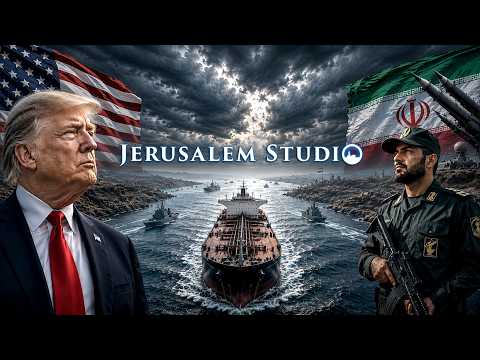
Two memoranda of understanding, both containing 14 points, were spearheaded and signed by the United States. The first was the MOU with Iran, which aims to end hostilities and establish a framework for future negotiations. That agreement attempted to link multiple war arenas and to confine Lebanon to Iranian strategic dictates. The second memorandum, the Israeli–Lebanese agreement, seeks to do the exact opposite. The Iranian–American MOU calls for the “immediate and permanent termination of military operations on all fronts, including in Lebanon” and includes language aimed at halting Israeli operations in Lebanon, “ensuring the territorial integrity and sovereignty of Lebanon.”
The second MOU declares the intention of Israel and Lebanon “to conclusively end the conflict, address its underlying causes, and thereby formally conclude any state of war.” It further stipulates that both countries will respect each other’s sovereignty and that bilateral negotiations—supported by the United States—will serve as the framework for progress.
In other words, if the first agreement attempts to hold Lebanon hostage to the Iranian–American process, the second seeks to set it free by giving the Lebanese state a chance to regain sovereignty over its territory.
The newly signed U.S.-brokered framework agreement between Israel and Lebanon represents a rare strategic opening following decades in which conflict between the two states was largely driven by non‑state actors operating from Lebanese territory. Historically, Palestinian militias and later Hezbollah—an Iranian‑backed organization responsible for extensive violence and human rights abuses—exploited Lebanon’s institutional weakness to establish autonomous zones that repeatedly drew Israel into war, while the Lebanese state itself remained too weak to shape events.
The new agreement is significant because Lebanon, for the first time, publicly articulates an intention to reclaim sovereignty and limit Hezbollah’s military autonomy, while Israel commits to a pilot transfer of territory to the Lebanese Armed Forces to test their ability to maintain control.
Although the road to success is long, and although Hezbollah and Iran will undoubtedly attempt to sabotage this path, the willingness of Israel and the Lebanese state to work together to strengthen their respective sovereignties can be interpreted as a positive beginning. It is important to remember that much of Lebanon’s agony has been caused by foreign forces that exploited Lebanese weakness to pursue sectarian objectives. Strengthening Lebanon—now in the form of a new Lebanese–Israeli–American trilateral alliance—may indeed be the first step toward restoring Lebanon’s stability and agency.
Dr. Nir Boms serves as the Director of the TAU Workshop on Israel and the Middle East at Tel Aviv University and is the founder of the Program for Regional Cooperation and the Gulf Israel Policy Forum